roast plan
( from instagram post 2024.5.28 )
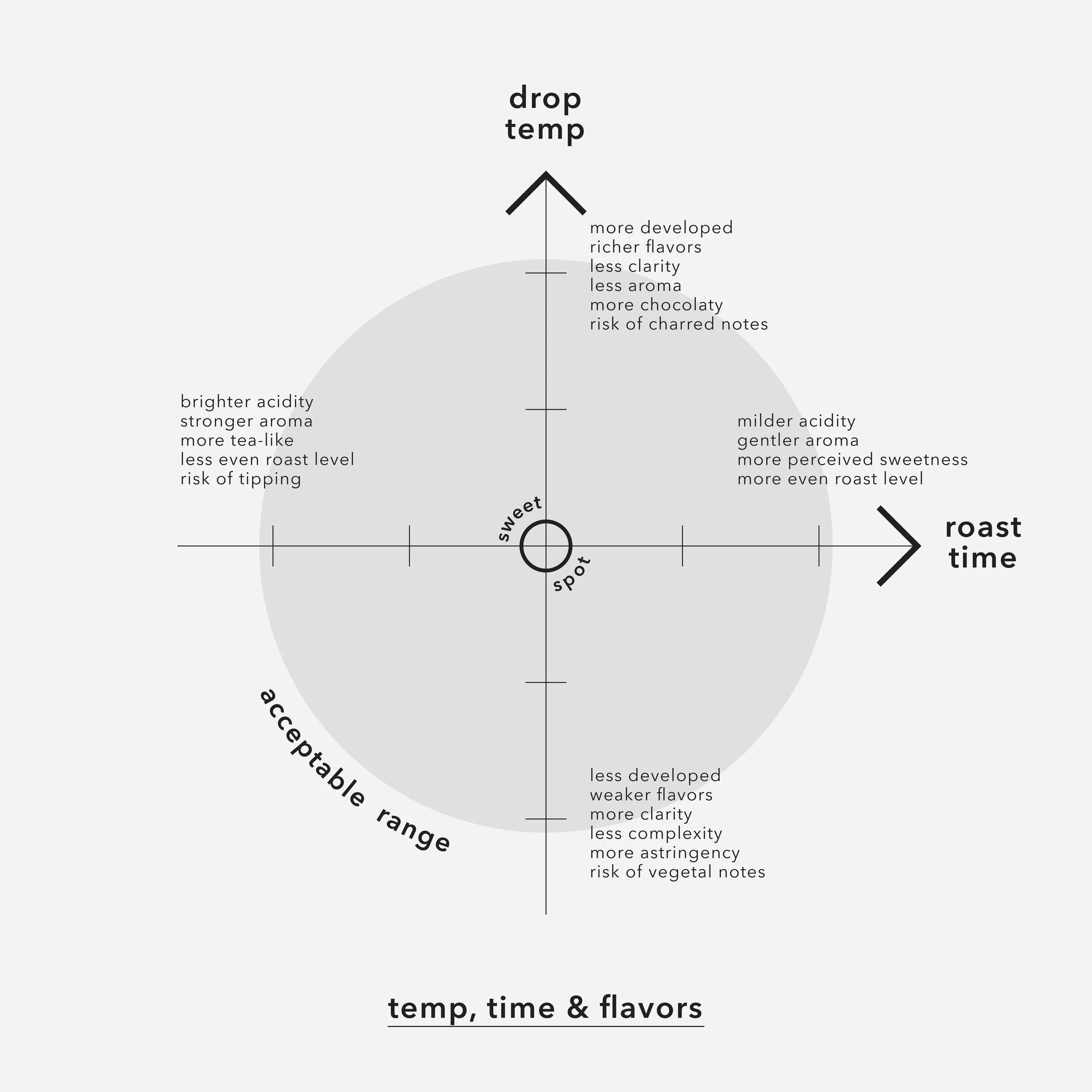
Last year I post a diagram showing how roast time and drop temp can “generally” change flavors (exception always exists!) so roasters can dial in new coffees in a more predictable way. What I forgot to emphasize though is that this "dial-in compass" will not work for you if you don't produce consistent roast curves in the first place.
Having stringent protocols is important especially for drum roasters. A common example is a poor warmup that impedes roast progress as the drum does not retain enough heat. One may want to catch up and compensate with higher gas but it will never save the batch. It is because bean moisture level and density are gradually decreasing as a batch develops, and a late high gas will not guarantee the same heat transfer rate to the inner bean (rather will likely scorch the bean surface). Even two curves having the same roast time and drop temp will not taste the same if the curve shapes are different.
To make good use of the compass, first make sure there are strict practices (warmup, bbp) to enable curve replication. Consistency is always the step one. After that, make small adjustment (one at a time) until you reach the sweet spot.
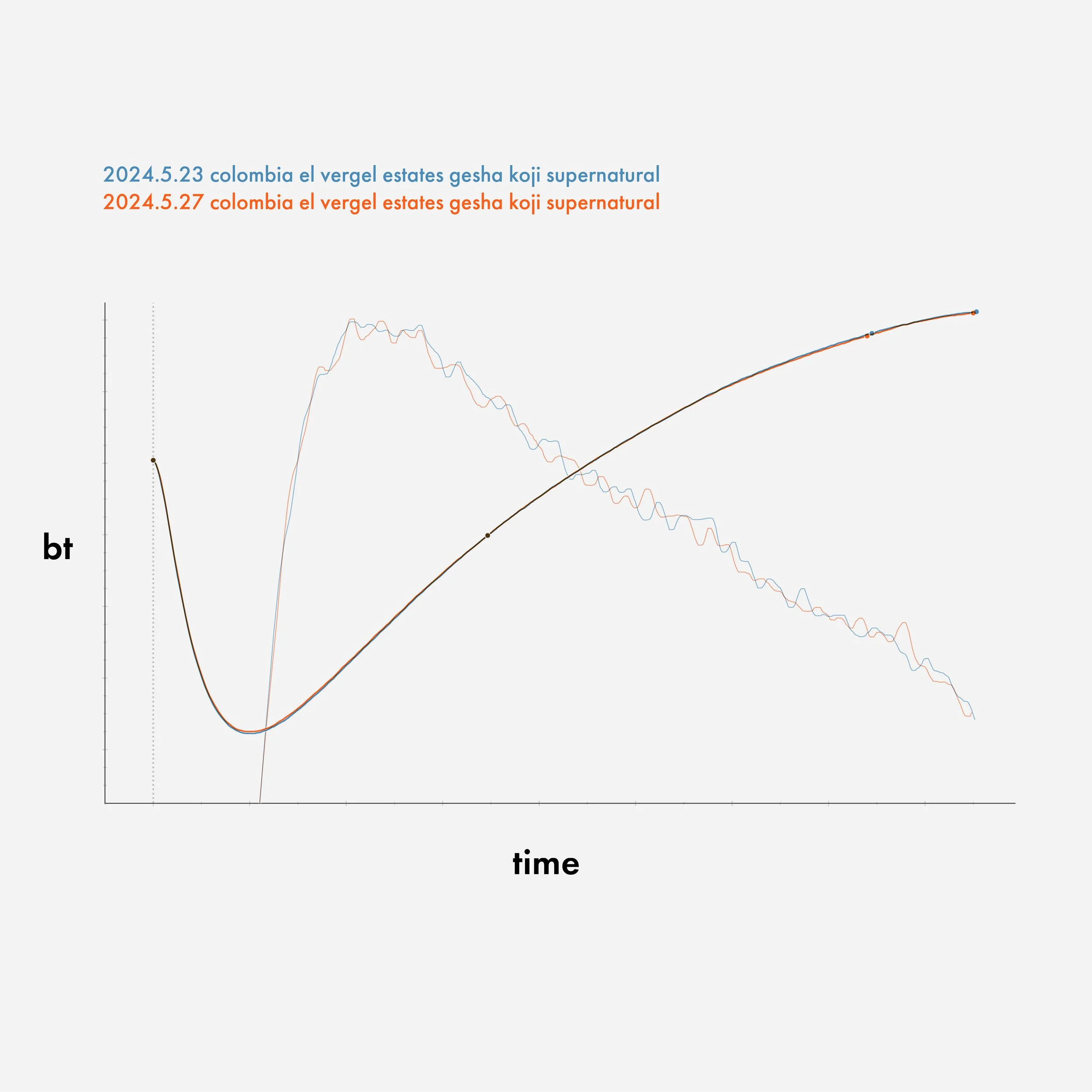
The 2nd image shows what level of consistency can be expected - two batches of same coffee, same batch size and roasted 4 days apart. To make replication possible, it takes machine tuning, good maintenance and hundreds of test batches - not a fun task at all but worthwhile to make better coffees.