coffee bed
( from instagram post 2024.6.22 )
Scott Rao's recent post on 2024.6.21 about "over-extraction" has made me rethink the relationship between channeling and cup quality. He mentioned that he had pulled shots reaching 30% EY without bitterness or astringency, thus high EY is not the culprit and "over-extraction doesn't exist".
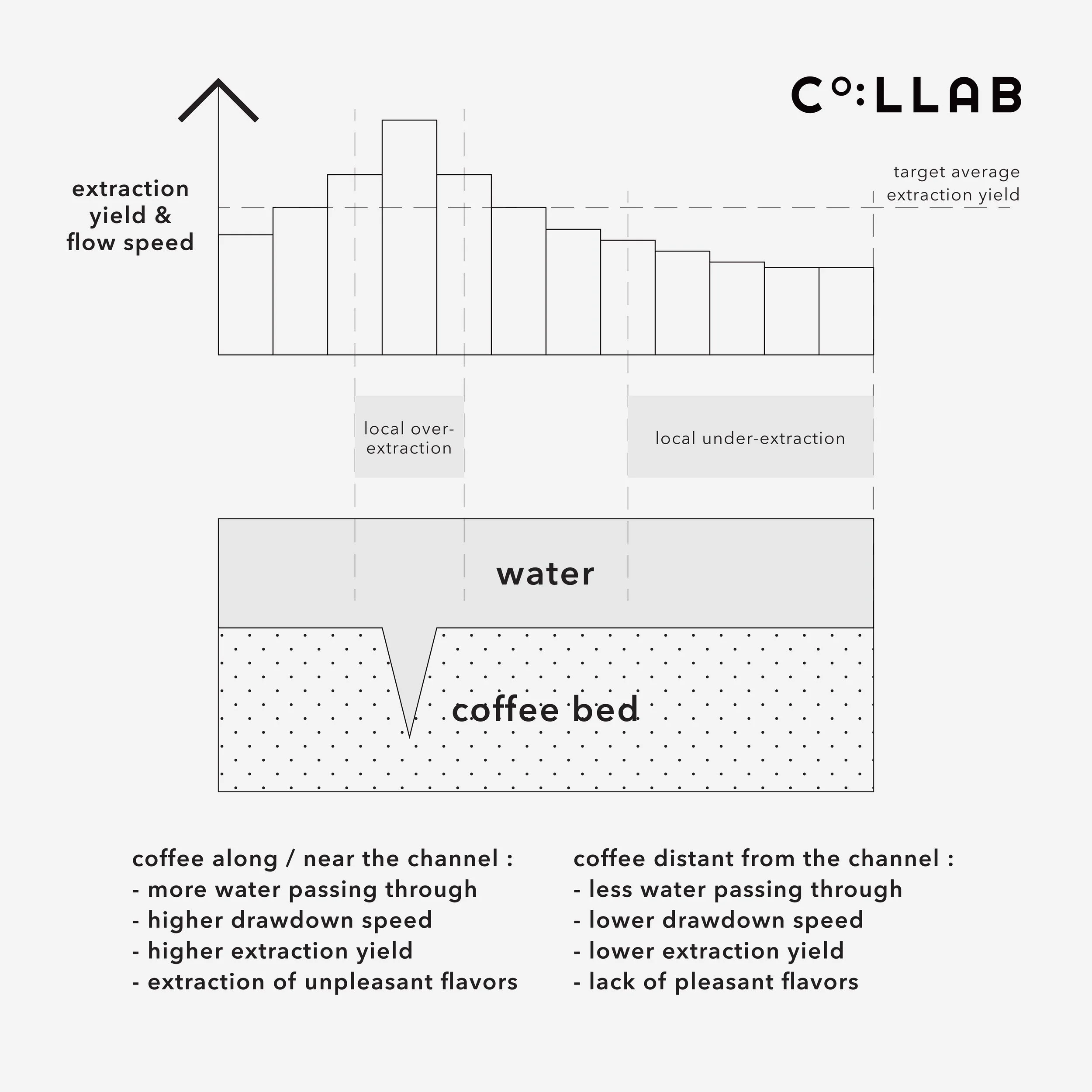
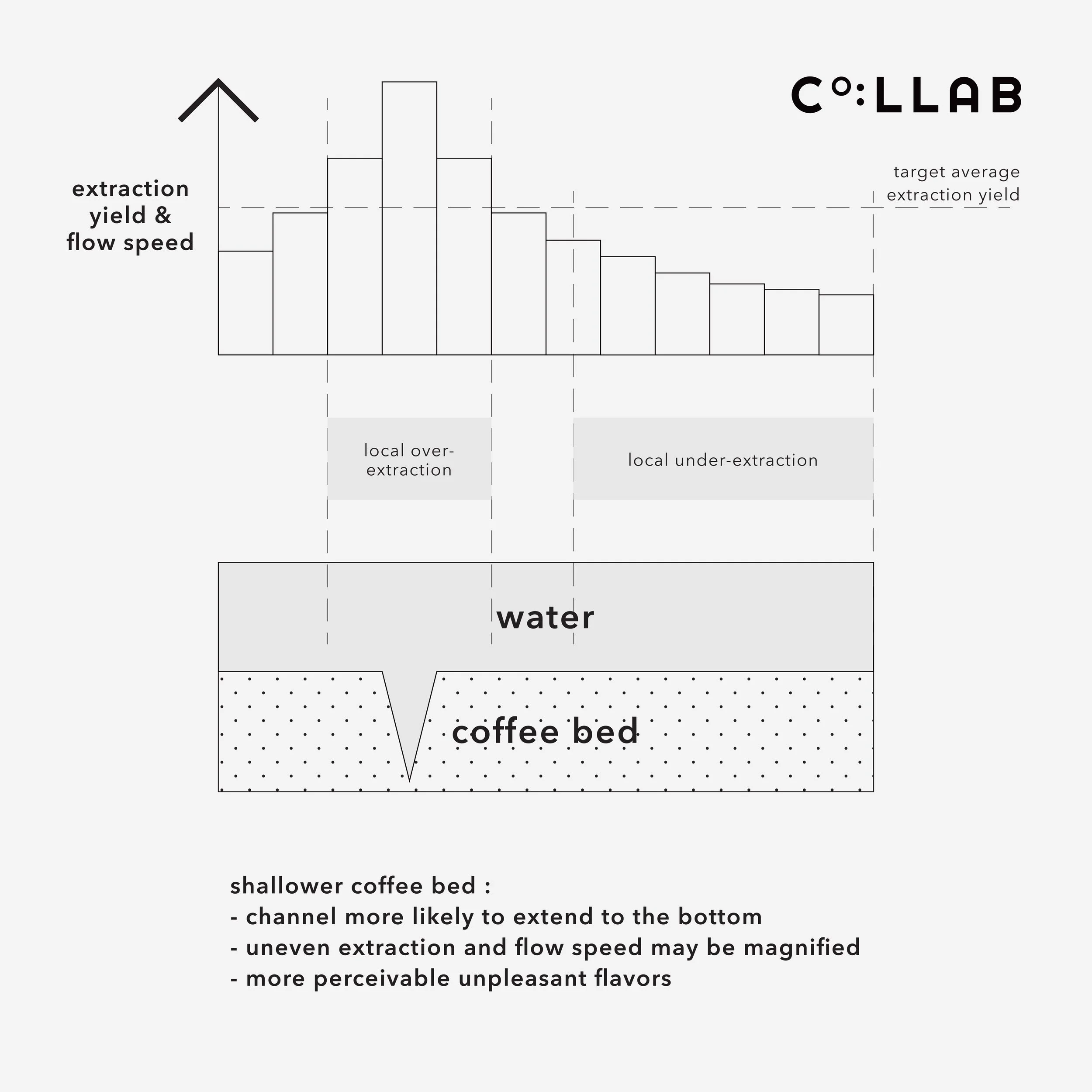
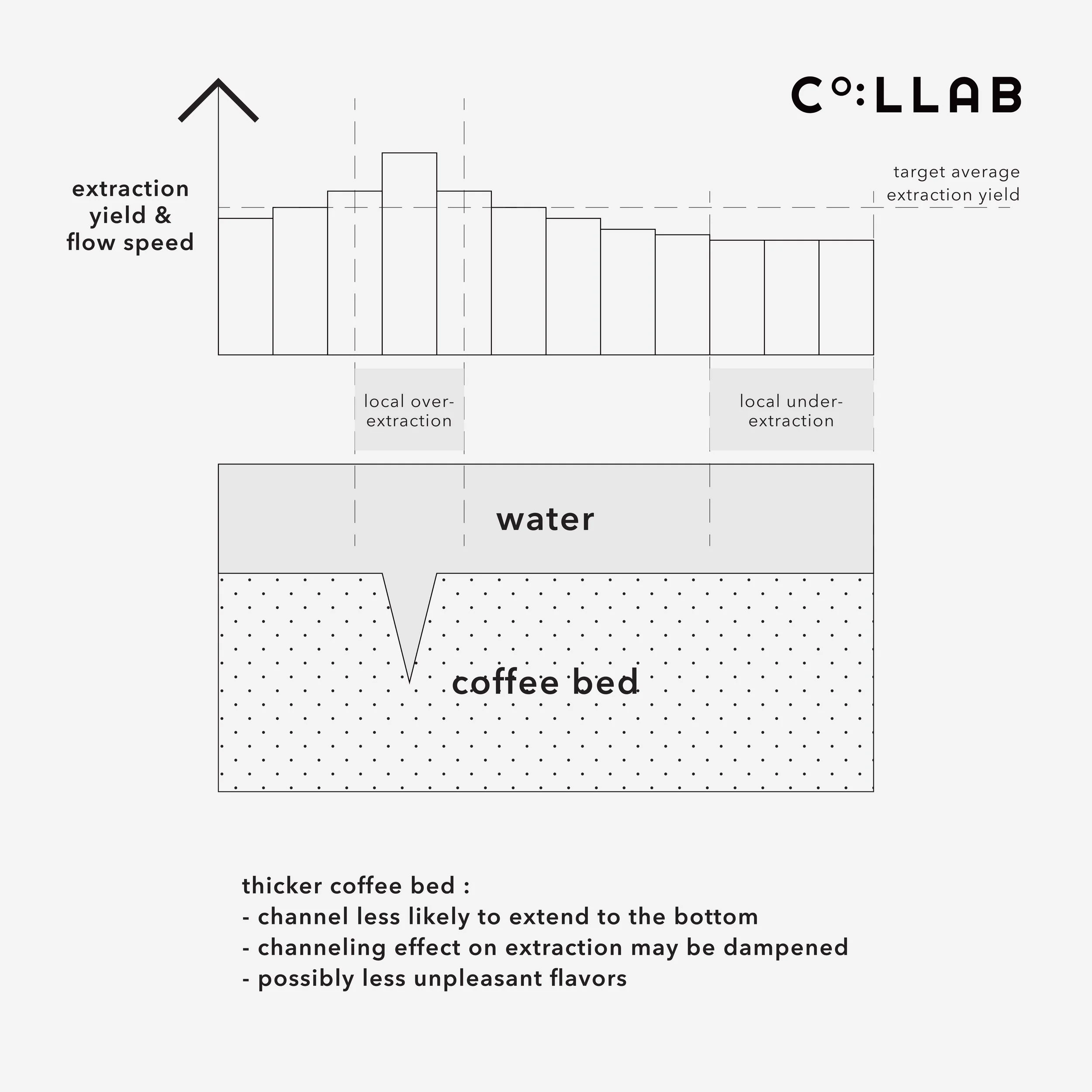
If it is not the "quantity" of extraction that matters, then it must be "quality" that I want to look into, i.e. evenness of extraction. Imagine a flat coffee bed (e.g. Pulsar or espresso) with a channel somewhere, and the following might happen:
More water is drawn into the channel than the rest of coffee bed, and the coffee near channel is more extracted than other areas.
Water is passing through the channel at a higher speed than the rest of coffee bed.
High volume, high flow speed percolation is more likely to extract larger molecules that give the astringent note (this also explains why a 30% EY shot can be free from astringency if puck prep and flow rate are tightly controlled).
Areas further away from the channel will be less extracted and cannot bring out the good flavors (local under-extraction).
Unlike "quantity" that can be measured using a refractometer (as TDS and average EY), there is no easy way to measure "quality" and we have to find out by tasting. Yet it is possible to improve our brews by avoiding channels. Some good ways include a thicker coffee bed, wdt, water level control, swirling, pouring stream control and flow rate control. Pulsar has most of these issues well-covered and I never need to worry about consistency of my hand pouring.
( Let's not bother thinking about a v60 scenario - not only the coffee bed is conical, the bypass along the edge and the turbulence caused by pouring stream are also making water paths unpredictable, let alone handling channels. )