immersion vs percolation
( from instagram post 2025.5.10 )
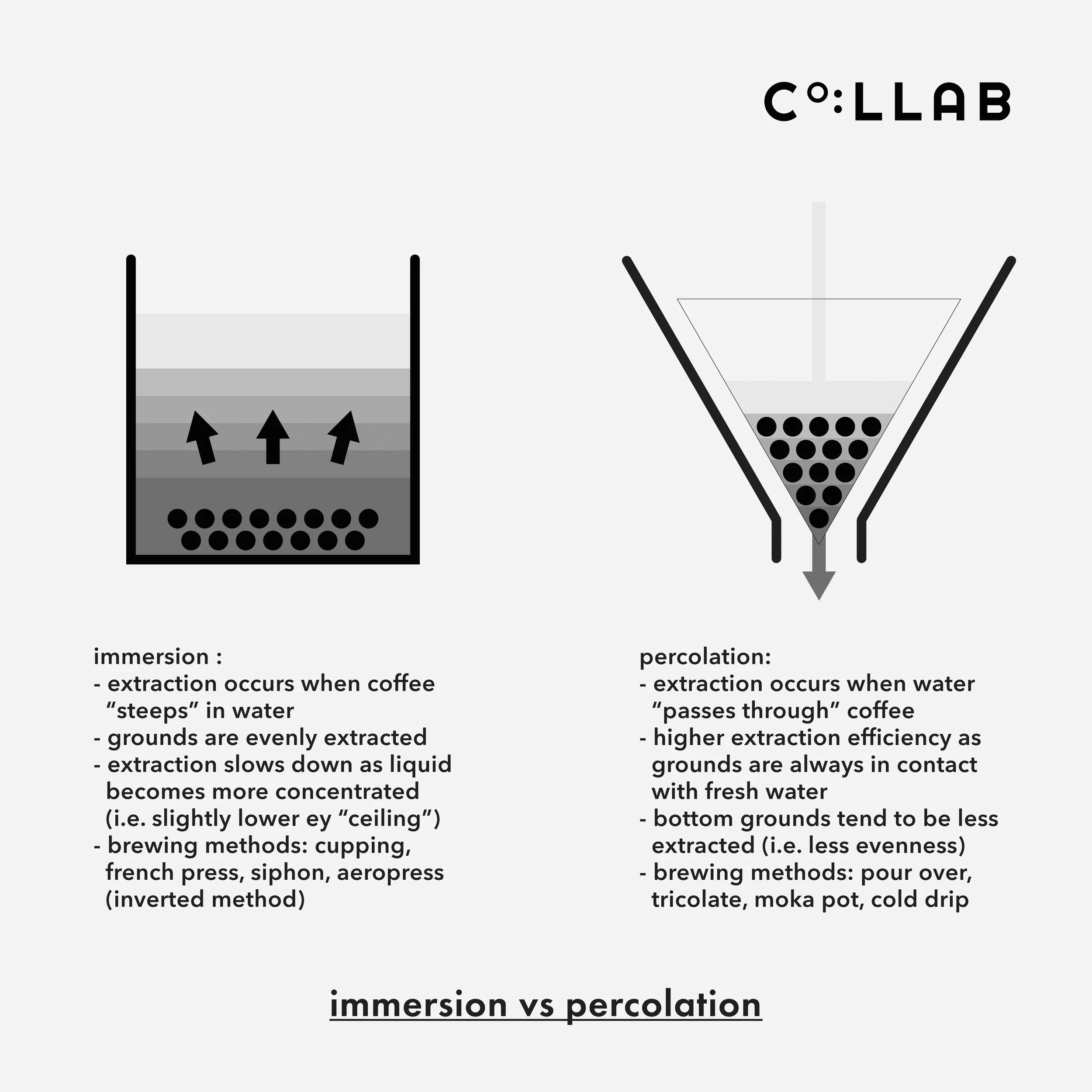
Filter brewing comprises a combination of immersion and percolation extractions. Each extracts coffee in a different way and has different impacts on extraction efficiency and evenness.
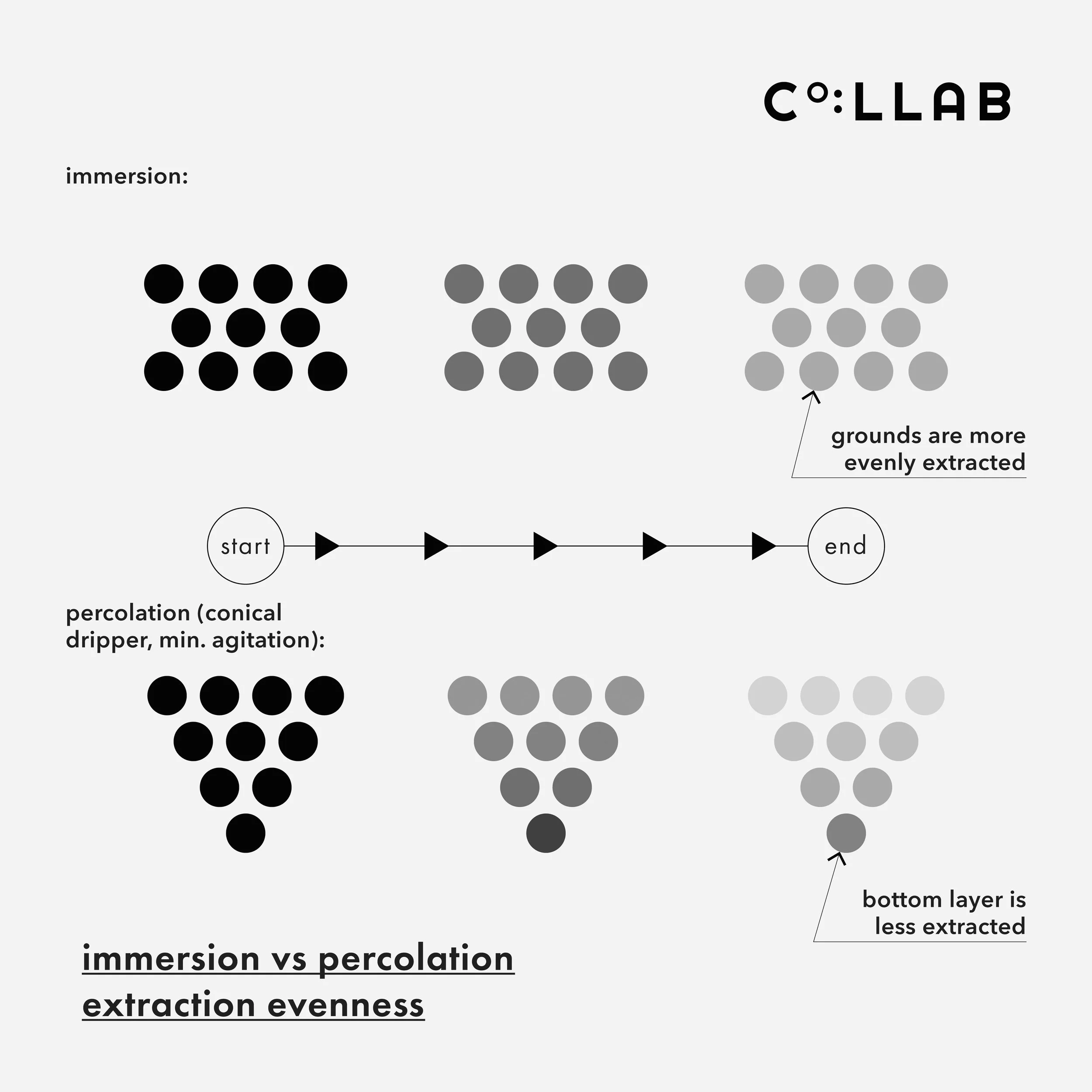
Immersion is a method where coffee "steeps" in water for a period of time. It usually involves minimal techniques, coffee grounds are evenly extracted and can deliver consistent qualities from cup to cup. Common issues such as degas and channeling never happen in immersion.
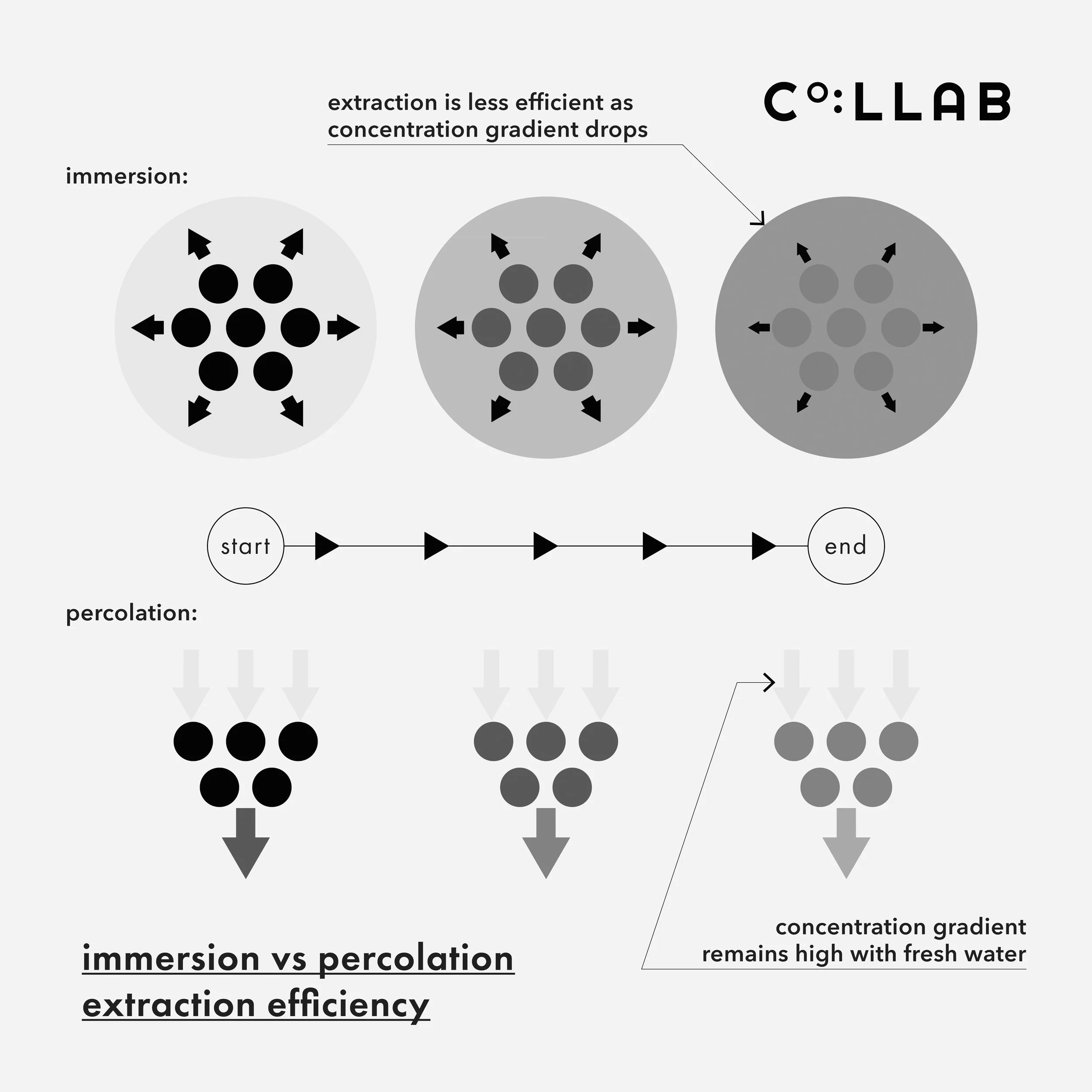
In most cases, immersion coffee reaches the extraction yield "ceiling" in 4 to 5 minutes. As the liquid is more concentrated, it becomes less capable of extracting dissolved solids (low concentration gradient). Cupping and french press are good examples of pure immersion.
On the other hand, percolation occurs when fresh water "passes through" coffee throughout the entire pouring phase, thus allows very efficient extraction. Given the same grind size and brew recipe, percolation can possibly achieve higher extraction yield than immersion, but it also requires more skills in prep and pouring.
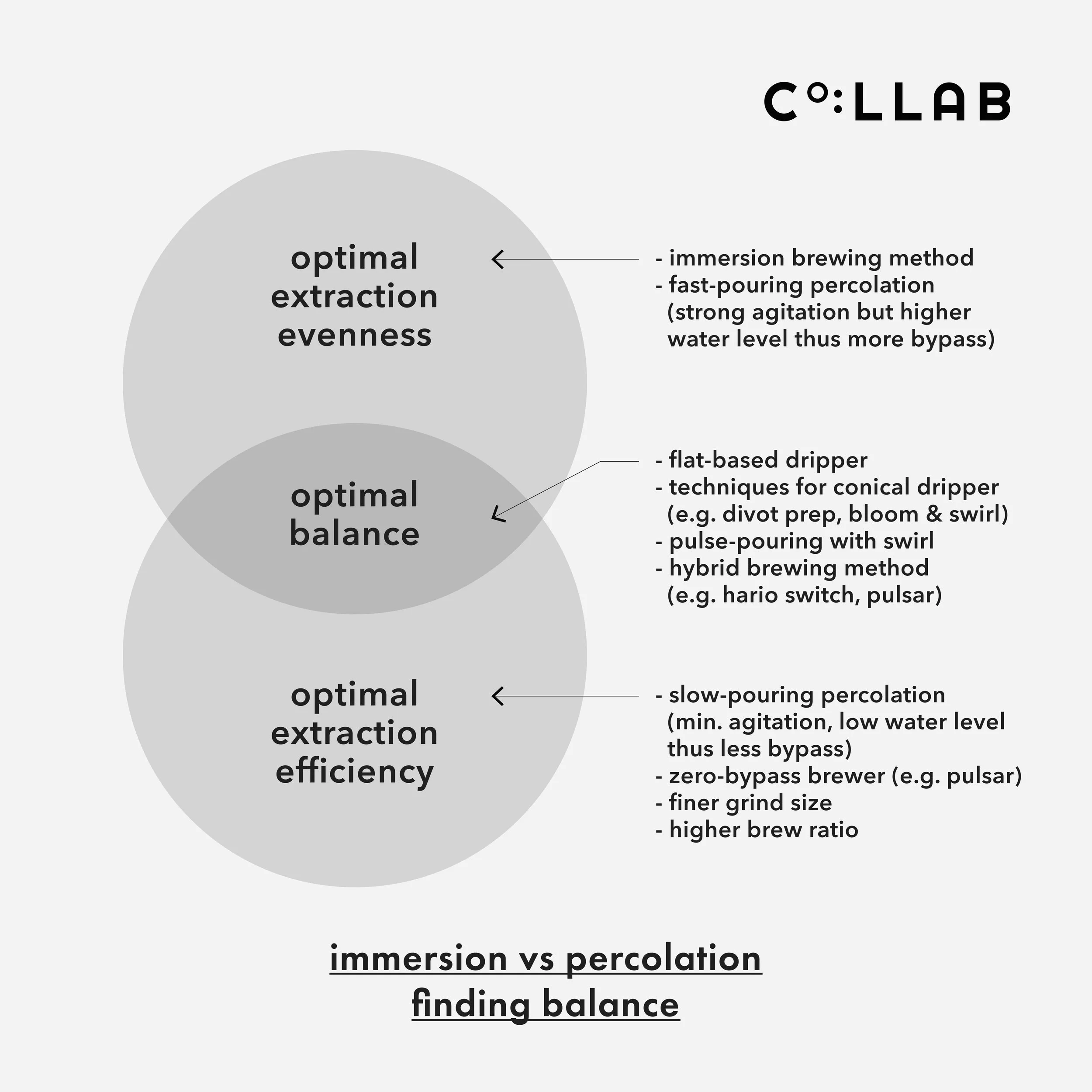
As water constantly flows through the coffee bed, some areas may be more saturated than others resulting in uneven extraction. For conical drippers, bottom layer also tends to be less extracted as the top surface always has first contact with fresh water. It is why we all master blooming, circular pouring, agitation, etc. to improve evenness. Improvement is also possible with brewers that allow hybrid brewing such as hario switch and pulsar.
The more I practice the more I am aware of the balance between extraction efficiency and evenness. The choice of brewer / dripper, grind size, brew ratio, pouring pattern, speed, bypass, etc. are all connected and impact the balance. The combinations are endless.