filtration speed
( from instagram post 2025.2.28 )
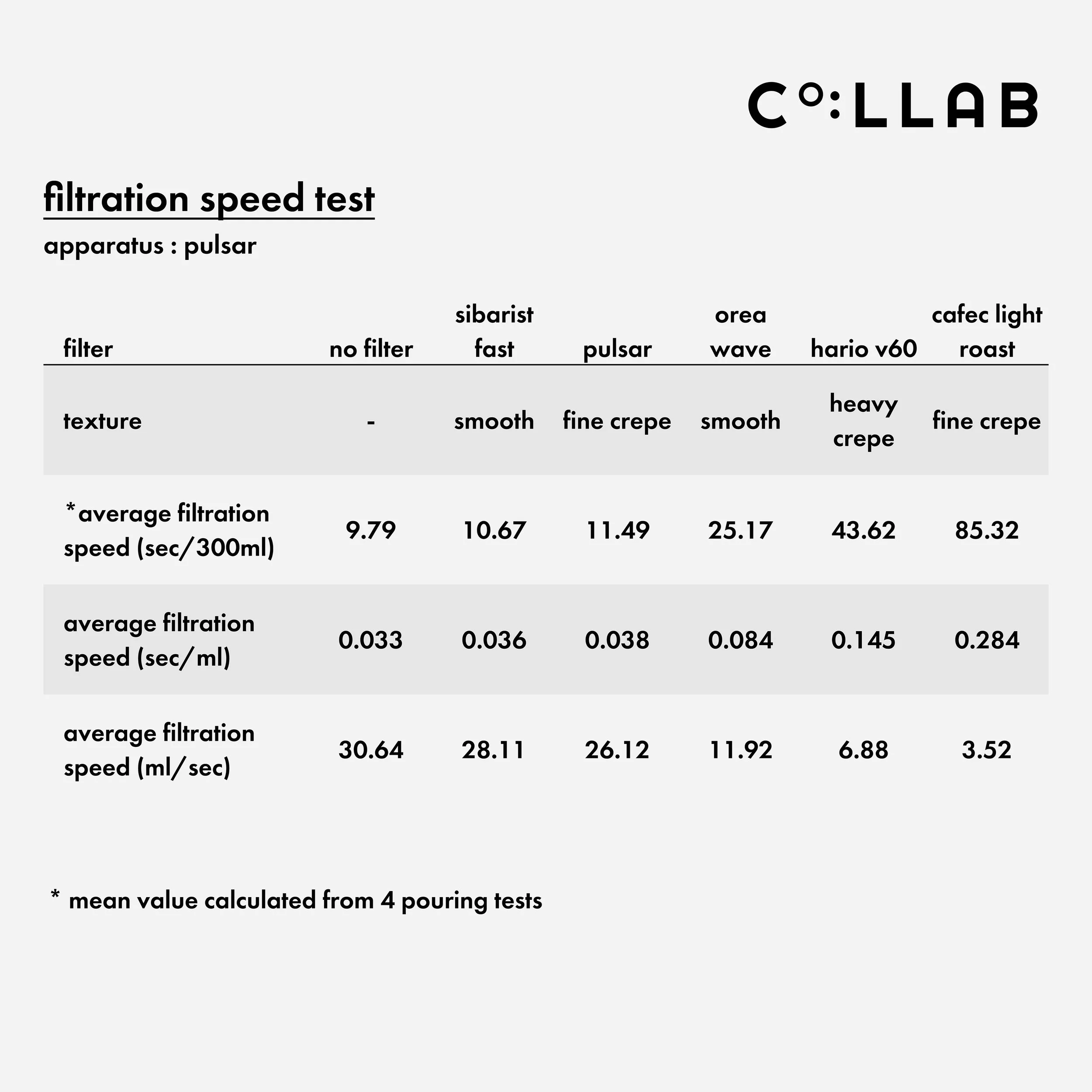
Out of curiosity, I did some simple experiments on filtration speed of filter papers, and hoped to find out how it is associated with flavor outcomes. It was set up with a pulsar brewer, filters cut into 8 cm diameter discs, and filtered water. As the pouring and timing were done by hand, please accept that the results would be less precise, but should give you a picture which filter is faster / slower by how much.
Pulsar brewer was used as a filter holder and vertical flow pipe. Dispersion cap was removed and the valve was half-inserted only to prevent water leaking through the front opening. Each filter was set and pre-wetted, then 6 pouring tests of 300 ml filtered water were carried out with the times recorded. The highest and lowest values were discarded, and the "average filtration speed" was calculated from the results of 4 tests.
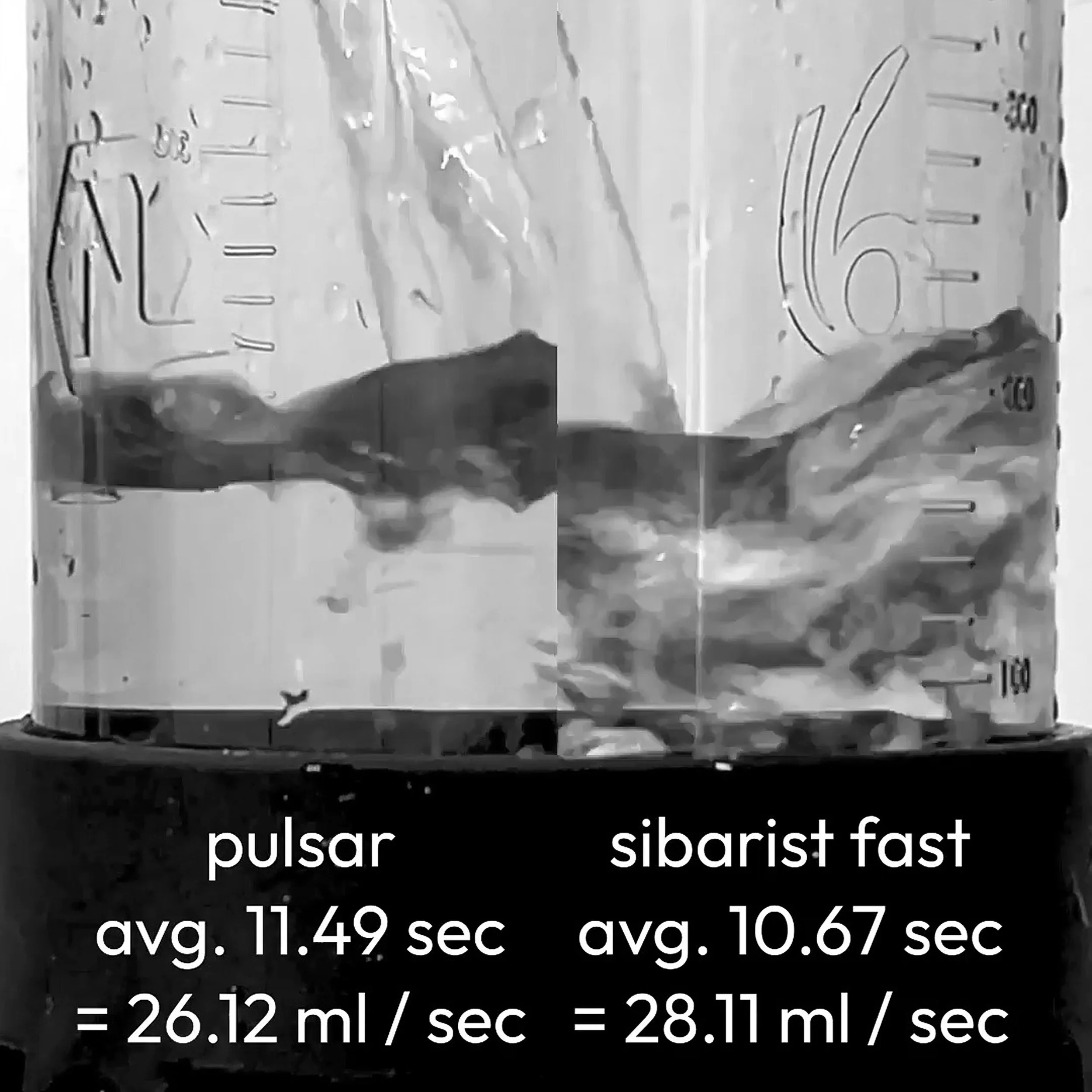
Sibarist FAST and pulsar were undoubtedly the fastest, nearly on par with the drawdown speed without filter. FAST might have won by a hair based on the results but considering the inaccuracy of hand timing, I would call it a tie. The key point though is that both filters are excelling in great brightness and cup clarity. I believe such qualities cannot be achieved without fast filtration capabilities.
What surprised me though was that orea wave was faster than hario v60. Having compared their pour overs side-by-side, v60 paper delivers brighter acidity and lighter body in general. Besides, I have shorter brew times with v60 than wave despite the test result. My speculation is that v60's heavily creped surface is more capable of trapping coffee fines thus mitigates clogging and ensures smoother drawdown.
Cafec Light Roast is the slowest in the group. It has higher particle retention capability and is meant to be slow under Cafec's "Roasting Level Special Paper" lineup. It aims at maximum aroma and clean cup.